Black soot on pot bottoms means your gas burner is burning yellow instead of blue — incomplete combustion from too little air in the gas mix. The usual causes are clogged burner ports, a misaligned burner cap, a maladjusted air shutter, or grease on the burner. Fix the flame first (it also produces carbon monoxide), then clean the pots with baking soda paste or a dedicated cookware cleaner.
You scrub the pot, cook one meal, and the black coating is back. The pot is not the problem — it is the messenger. A gas burner that blackens cookware is running a yellow, sooty flame instead of a clean blue one, and that yellow flame is telling you two things: the burner needs attention, and the combustion making that soot is also making carbon monoxide. Here is how to read the flame, fix the burner, rescue the pots, and know when soot has moved beyond the stove.
The short version
- Blue flame = clean burn. Yellow flame = soot factory. The pot bottom is your combustion report card.
- Four usual causes: clogged burner ports, misaligned burner cap, air shutter out of adjustment, grease on the burner.
- The same bad burn makes carbon monoxide — fixing the flame is a safety job, not just a cleaning one.
- Clean pots with baking soda paste or a cookware cleaner after fixing the burner — not before, or the soot returns tomorrow.
- Soot on walls, cabinets, or the range hood too? The problem has been running a while — the room needs cleaning, not just the pans.
Read the flame: blue vs. yellow
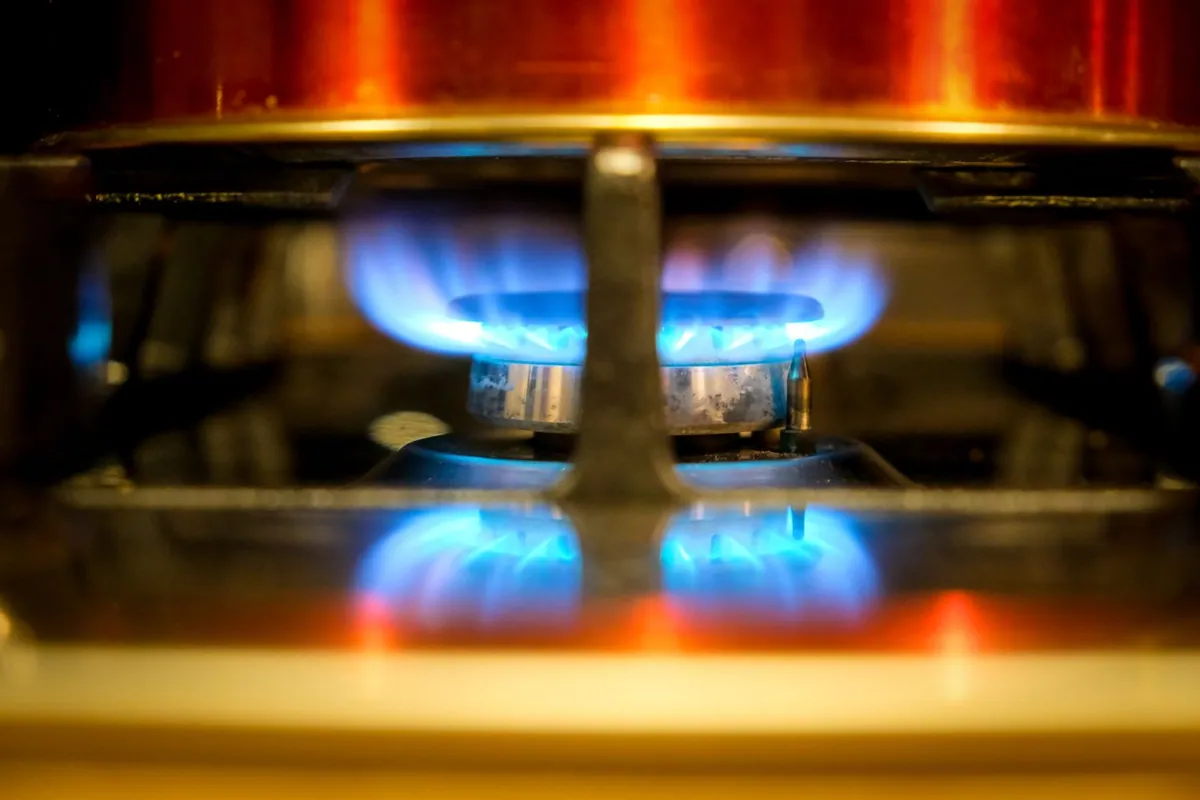
Natural gas and propane burn clean when premixed with the right amount of air: a crisp blue flame with a lighter blue inner cone, sitting stable on the burner. Starve the mix of air and combustion goes incomplete: the flame turns tall, soft, unstable, and yellow-to-orange, and unburned carbon leaves the flame as soot — which deposits on the coolest nearby surface. That surface is the bottom of your pot. A small yellow tip that appears only when the wok blocks airflow is minor; a burner that runs yellow at idle is the real signal.
The four causes of a sooty burner
- Clogged burner ports. The small holes around the burner head distribute the gas-air mix. Boil-overs, grease, and cleaning residue block them, forcing uneven flow and a ragged, yellow flame. The most common cause in a working kitchen.
- Misaligned burner cap. The cap lifted during cleaning and settled crooked. Even slightly off-seat, it disrupts the air draw and the flame pattern. The easiest fix on this list.
- Air shutter out of adjustment. The shutter (at the burner’s base or venturi) meters the air premix. Too far closed = yellow flame. It drifts with vibration and age, and on older ranges it may never have been set for your gas type.
- Grease and spill residue on the burner itself — burning off drips adds smoke and soot on top of whatever the flame chemistry is doing.
Fixing it step by step
- 1. Cool and disassemble. Grates off, burner caps off, burner bases exposed.
- 2. Soak and scrub. Caps and removable heads soak in warm soapy water; scrub off carbon and grease.
- 3. Clear every port. A straightened paper clip, sewing needle, or pin gently through each port hole. Skip toothpicks — they snap and become the new clog.
- 4. Dry and reseat. Everything bone dry, caps seated flush and centered. Test: the flame pattern should be an even blue crown.
- 5. Still yellow? Air shutter. On many ranges you adjust it by loosening a screw and rotating the shutter while watching the flame turn from yellow to blue. Check your manual — and if the range is older, converted between gas types, or the adjustment is buried, this is a quick job for an appliance technician.
The carbon monoxide note
The same incomplete combustion that makes soot makes carbon monoxide — an odorless, colorless gas. A burner that persistently burns yellow after cleaning deserves a prompt fix, a working CO alarm in the home deserves to exist either way, and a yellow flame you cannot correct is a reason to shut off the burner and call a technician rather than keep cooking on it.
Getting the soot off your pots
- Stainless steel: baking soda paste (baking soda + a little water), sit 15 minutes, scrub with a non-scratch pad. A dedicated cleaner like Bar Keepers Friend speeds it up. Heavy carbon: simmer water with a squirt of dish soap in the pot first to soften.
- Enameled and nonstick: baking soda paste only, soft sponge, patience — no abrasive pads, no oven cleaner.
- Cast iron: coarse salt scrub, then re-oil. Skip the soap debate; skip the soot next time by fixing the burner.
- Sequence matters: fix the flame first, then deep-clean the pots once. Cleaning first just gives the yellow flame a fresh canvas.
Soot spreading past the cookware?
Film on the backsplash, hood, and cabinets means the burner has been running dirty for a while. We remove baked-on soot film from kitchen surfaces properly.
Get a Boca Raton estimateWhen soot shows up beyond the stove
A burner that ran yellow for months does not confine its output to cookware. Look for gray film on the backsplash and range hood, darkening on the wall and cabinets around the stove, and in long-running cases, faint soot accumulation in the room beyond. Light film responds to the dry-first method in our guide to cleaning soot off walls — dry soot sponge before anything wet, or the residue smears. Widespread or baked-on film across walls, cabinets, and ceilings is where professional soot removal in Boca Raton earns its keep: the same combustion chemistry, at room scale, with finishes worth protecting.
Frequently asked questions
The burner is running a yellow flame — incomplete combustion caused by too little air in the gas mix. Unburned carbon leaves the flame as soot and deposits on the pot bottom. Clogged burner ports, a misaligned cap, or an air shutter out of adjustment are the usual causes.
Fix the flame. Clean the burner ports with a pin, reseat the burner cap flush, and adjust the air shutter until the flame burns blue. A blue flame deposits no soot. Cleaning the pots without fixing the burner brings the soot back the next meal.
It deserves prompt attention. A persistently yellow flame signals incomplete combustion, which produces carbon monoxide along with soot. Clean and adjust the burner, keep a working CO alarm, and call a technician if the flame stays yellow after cleaning.
Baking soda paste and a non-scratch pad handle most of it; a cookware cleaner like Bar Keepers Friend speeds heavy deposits. Simmering soapy water in the pot first softens thick carbon. Avoid harsh abrasives on enameled and nonstick surfaces.
Yes. Months of yellow-flame operation deposit gray film on the backsplash, hood, nearby walls, and cabinets. Light film cleans with a dry soot sponge followed by degreaser; widespread or baked-on film across the room calls for professional soot removal.
The bottom line: black pots are a flame problem wearing a cookware costume. Read the flame: blue means done, yellow means clean the ports, seat the cap, and set the air shutter — because the burner painting your pots is also making carbon monoxide. Fix the fire first, scrub the pots once, and check the walls if it ran yellow for long.