Fire Damage Restoration in Boca Raton
After the fire trucks leave, the real damage keeps working — acidic soot etching finishes, smoke residue settling into walls and HVAC, and an odor that won't air out. We restore Boca Raton homes from soot removal through deodorization to the final coat of paint.
Fire damage? Start restoration now
Tell us what happened — we'll assess the damage and give you a written estimate.
Call (728) 224-6880Or email info@bocasmokeandsoot.us — photos of the damage help.
Fire damage restoration returns a home to its pre-fire condition. It starts with mapping how far smoke and soot actually traveled — almost always further than the flames — then removes the acidic residue, eliminates odor at the source, cleans the HVAC, and repairs, seals, and repaints damaged surfaces. Order matters: residue comes off before anything gets wet, sealed, or painted.
The fire is the fast part — the damage keeps going
Flames do their damage in minutes. What they leave behind keeps working for weeks: soot is acidic and progressively etches paint, metal, glass, and grout; smoke residue bonds deeper into porous surfaces as it ages; and odor molecules migrate into drywall, insulation, and soft goods. In Boca Raton the clock runs faster — our humidity keeps residue chemically active, and constantly running AC carries smoke particles through the ductwork into rooms the fire never touched.
Restoration is the discipline of reversing all of that in the right order:
- Stabilize and assess — document everything for insurance and map the true spread of soot and odor, including the residue you can't see.
- Remove the source — dry-clean then wet-clean soot from every affected surface, and clean contents room by room.
- Eliminate the odor — thermal fogging, ozone treatment, and HVAC cleaning remove the smell at its source instead of masking it.
- Restore the finishes — seal stained surfaces so nothing bleeds back through, then repaint and refinish.
Why "just repainting" fails: paint over unsealed soot and the stain and smell bleed straight through within weeks. Every step in restoration exists because skipping it undoes the steps after it.
Every stage of fire recovery
If the fire was today, start with the first 24 hours after a house fire — utilities, securing the building, and the documentation that has to happen before anyone cleans.
From the room where it started to the smell three rooms away — pick what fits your situation.
Kitchen & Grease Fire Cleanup
The most common fire we restore — greasy soot and protein residue, cleaned the right way.
Learn moreSmoke Damage Restoration
Whole-home smoke residue on walls, ceilings, contents, and inside the HVAC.
Learn moreSoot Removal
Acidic soot lifted from walls, ceilings, brick, and paint before it stains for good.
Learn moreSmoke Odor Removal
Post-fire smell removed at the source with thermal fogging and ozone.
Learn moreElectrical Fire Soot
The oily, acrid residue burning wiring and plastics leave behind.
Learn moreCommercial Fire Cleanup
Restaurants, offices, and retail restored fast to limit downtime.
Learn more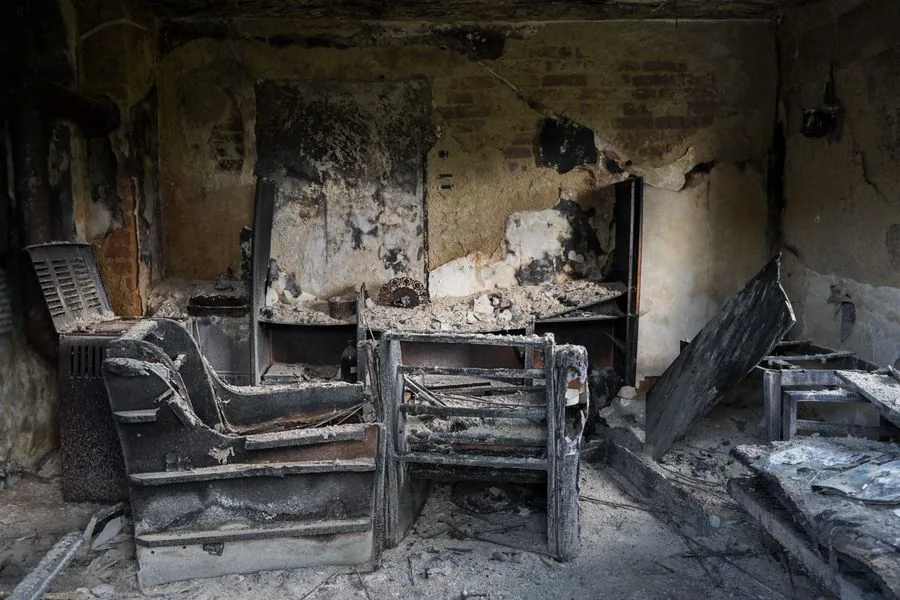 Soot keeps damaging surfaces until it's removed
Restoration-grade, not rental-counter
Fire residue is chemistry — acidic soot, oily films, and embedded odor each need the right counter-move, in the right order.
-
HEPA air scrubbers & vacuums capture airborne soot before it settles deeper or rides the AC into clean rooms.
-
Dry-then-wet soot removal — chemical sponges lift dry soot first, so wet cleaning doesn't smear it into the surface.
-
Thermal fogging & ozone reach odor where it actually lives — inside walls, soft goods, and cavities — instead of perfuming the air.
-
Stain-blocking sealers & refinishing lock down residue in porous surfaces, then repaint and refinish to pre-fire condition.
Our fire damage restoration process
Assess & document
We map the full spread of fire, smoke, and soot damage — including what insurance adjusters need to see — before anything gets touched.
Stabilize
Air scrubbing and containment stop soot from migrating further while the work happens.
Remove soot & residue
Dry cleaning first, then the right wet method per surface — walls, ceilings, contents, and the HVAC system.
Deodorize
Thermal fogging and ozone treatment eliminate the odor at its source, not just in the air.
Seal & restore
Stain-blocking sealers, repainting, and refinishing return every surface to pre-fire condition.
Restoration in a humid, condo-heavy city
Boca Raton's housing works against fire damage in two specific ways. First, humidity: acidic soot stays chemically active longer here, so the window before permanent etching and staining is shorter than national guides suggest. Second, shared buildings: in Boca's condos and townhomes, smoke crosses unit lines through shared HVAC, chases, and hallways — a fire in one kitchen can mean odor complaints three floors up.
The good news: Boca Raton Fire Rescue — an ISO Class 1 department — typically knocks fires down fast, so most local jobs are restoration rather than rebuild. We work across the city and nearby coastal towns — see all areas we serve.
What untreated fire damage does, week by week
Fire damage restoration is a race against chemistry. Here's what happens to a Boca Raton home when the residue is left in place:
- First hours: acidic soot begins discoloring plastics, appliances, and marble; anything porous starts absorbing odor. Almost everything is still fully recoverable.
- First days: soot etches grout, yellows painted walls and wood finishes, and starts corroding metal fixtures and electronics. Fabrics and upholstery begin taking permanent stains.
- First weeks: staining sets into walls and ceilings for good, corrosion pits metal and glass, and odor bonds so deeply into drywall and insulation that treatment costs multiply — restoration turns into replacement.
South Florida compresses that timeline: humidity keeps the residue chemically active around the clock. It's the single best argument for calling the day the fire department leaves, not the week after.
Fire damage and Florida homeowners insurance
Fire is the classic covered peril — sudden, accidental fire damage, including smoke and soot damage to rooms the flames never reached, is typically covered by Florida homeowners policies. What trips claims up is documentation: adjusters need to see the full spread of the damage, and smoke residue is easy to under-scope because so much of it is invisible or in places nobody looks — duct interiors, wall cavities, closets two rooms away. We photograph and document the complete spread as part of every restoration, and our written scope gives your adjuster something concrete to work from. Florida's claim process also rewards moving early — reporting promptly and preventing further damage are both policyholder duties under most policies, and prompt professional cleanup demonstrates exactly that.
Cost, securing the property, and the claim
The things people ask about first, answered properly.
Restoration Cost
What fire and smoke restoration actually costs, and what drives the number.
Learn moreEmergency Board-Up
Securing the property against weather and entry before anything else.
Learn moreWater Damage & Drying
Extraction and structural drying before wet materials turn into a second problem.
Learn moreContents Pack-Out
Inventorying, removing and cleaning belongings off-site while the building is restored.
Learn moreInsurance Claims
Documenting the loss so the claim holds up — with Florida's real deadlines.
Learn moreFire damage restoration FAQ
It covers everything after the fire is out: assessing how far smoke and soot spread, removing soot and smoke residue from walls, ceilings, and contents, eliminating odor at the source with thermal fogging and ozone, cleaning the HVAC, and repairing or refinishing damaged surfaces so the home looks and smells like the fire never happened.
Cleanup removes what the fire left behind — soot, residue, and odor. Restoration is the full journey back to pre-fire condition, which includes that cleanup plus sealing, repainting, refinishing, and repairing damaged surfaces and finishes. Most Boca Raton kitchen and contained fires need thorough cleanup with light restoration; larger fires need more rebuild work.
As soon as the scene is released and safe. Soot is acidic and starts etching metal, grout, and finishes within hours, and South Florida humidity accelerates both staining and odor set-in. The sooner residue comes off, the more of your home and contents can be saved rather than replaced.
Sudden, accidental fire damage is typically covered by Florida homeowners policies, including smoke and soot damage to areas the flames never touched. We document the full spread of the damage — including the residue you can't see — which supports your claim.
Often, yes. Hard-surface contents usually clean well; upholstery, mattresses, and soft goods depend on how deeply the smoke penetrated. We assess item by item and tell you honestly what's worth restoring and what's better claimed as a loss.
A contained fire with smoke spread — the most common case in Boca Raton — typically takes days, not weeks: soot removal, deodorization, and sealing/repainting the affected rooms. Fires with structural damage take longer and we give a written timeline after assessment.
Fire damage in your Boca Raton home?
Don't let soot set or odor spread. Get a written restoration estimate today.