Soot Stains on Ceiling Removal in Boca Raton
Dark patches above lights, grid-like lines across the ceiling, or a haze around vents are all soot — and ceilings are the hardest surface to clean without making it worse. Here's how we do it safely.
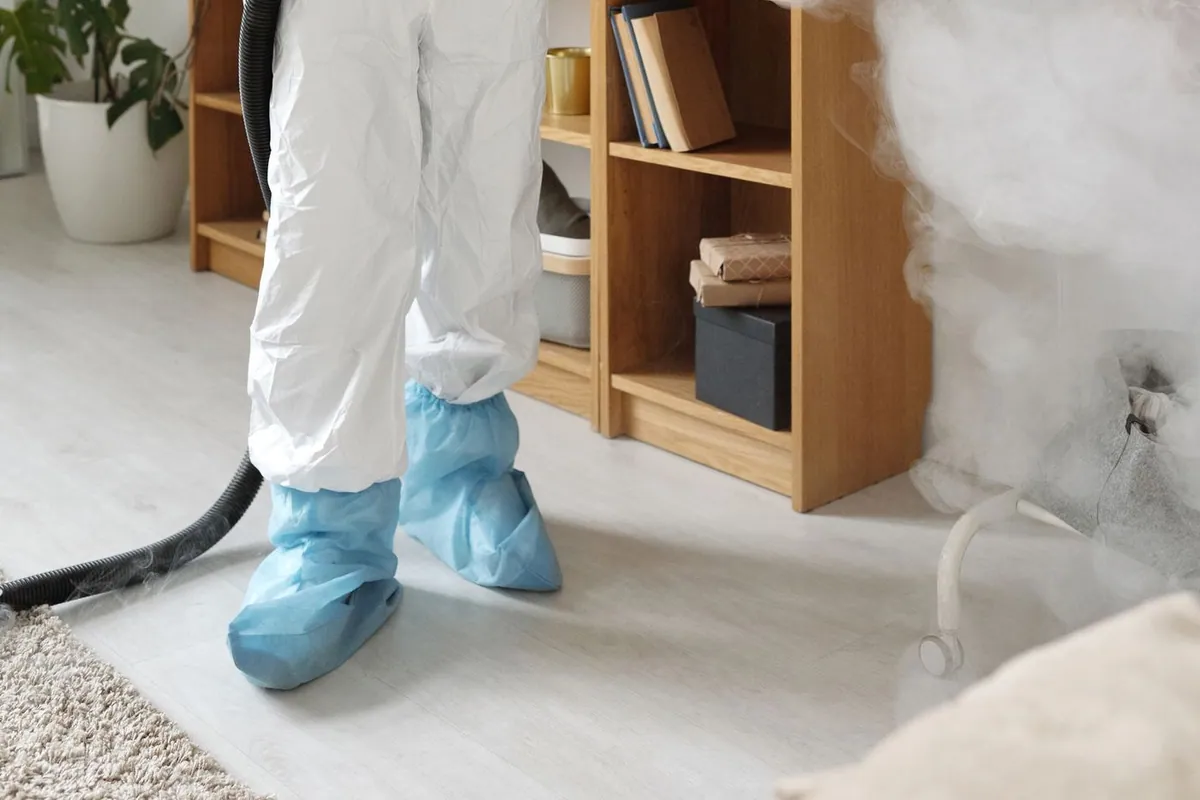 The soot residue we remove
Soot on a ceiling is harder than on walls because flat ceiling paint is fragile and gravity drips any cleaner. Dry-sponge first in sections, then use a well-wrung cloth with a mild cleaner, drying each area as you go. Ghost lines over the joists mean thermal tracking, which needs sealing before repainting.
Ceilings collect it first and worst because heat and the particles it carries rise straight to them. If you see staining up top, start with our full soot removal overview, then read on for ceilings.
Understanding the problemWhy ceilings stain in patterns
Soot on a ceiling rarely looks random. Two patterns are especially common:
- Thermal tracking (ghosting): faint dark lines in a grid or stripe pattern. Because soot sticks to cold, it collects on the joists and fasteners behind the drywall — which conduct cold and run cooler than the insulated gaps between them — literally outlining the framing. Where attic insulation is thin or gapped, the effect is sharper.
- Halos around fixtures and vents: recessed lights, ceiling fans, and AC supply vents create air movement that concentrates soot into rings and smudges.
Homeowners almost always read those black stripes as mold and panic. They're not: thermal-tracking lines are soot following the framing, and the tell is that they run dead straight along the joists rather than spreading in blotches.
Ceilings are also unforgiving: they're usually flat or matte paint (which holds residue tightly), they're awkward to reach, and gravity means any wet cleaner you apply runs and streaks. This is the surface where DIY most often turns a faint haze into a permanent mess.
What causes a soot-stained ceiling
- Candles burned regularly in the room below the stain
- Cooking smoke and grease drifting up and along the ceiling
- Fireplace backdraft or puffback
- HVAC distributing residue through ceiling vents
- Poor insulation creating cold spots that attract ghosting
Don't start with a wet roller or sponge mop. On a matte ceiling, water spreads the oily soot into long streaks and can lift the paint. Ceilings must be dry-cleaned first and worked in sections.
Our ceiling soot removal process
Protect the room
We cover floors and furnishings — ceiling work drops debris — and HEPA-vacuum the loose deposits before anything else.
Dry sponge in sections
We use chemical dry sponges across the ceiling in overlapping sections so there are no missed lines or halos.
Seal & repaint
Because ghosting can re-bleed, we typically seal with a stain-blocking primer and repaint for a clean, uniform finish.
Soot on ceilings FAQ
That's thermal tracking, or ghosting. The studs, joists, and screws behind the drywall stay cooler than the spaces between them, so airborne soot settles along those cold lines and outlines the framing. It signals a soot source plus cold spots, and it usually needs sealing and repainting after removal.
Sometimes, but textured and popcorn ceilings are fragile and trap soot in every crevice, so dry removal is delicate and full cleaning isn't always possible. In many cases sealing and repainting is the more reliable fix. We'll tell you which applies after looking.
If you paint directly over soot, yes — it bleeds through within weeks. It only stays gone if the soot is removed and the surface sealed with a stain-blocking primer before the finish coat.
Soot on your ceiling? Let's look before you paint.
A estimate now can save you from painting twice.