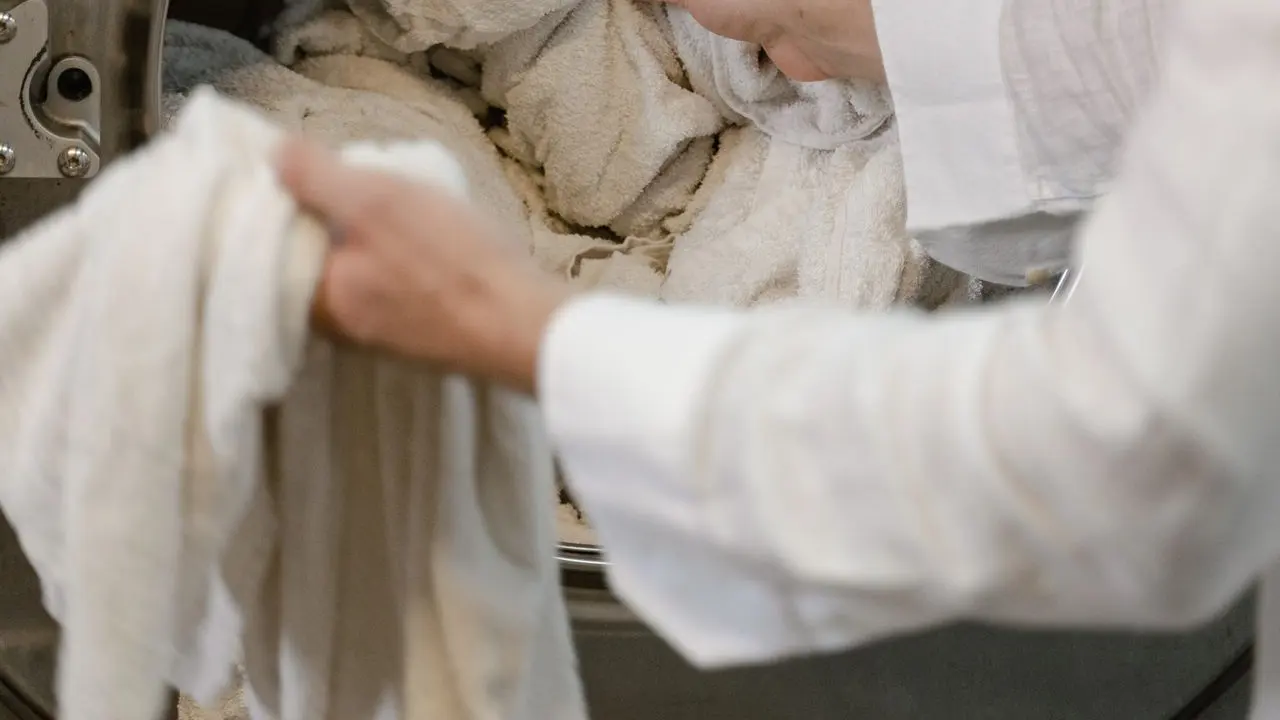
Wash smoke-affected clothes on the warmest setting the label allows with half a cup of white vinegar added, and air-dry them — dryer heat permanently sets the odor. For fabrics you cannot wash, seal them in a bag with baking soda or activated charcoal for a day or two. Clean the room before the contents, or you will re-contaminate everything you just cleaned.
The short version
- Never tumble-dry until the smell has gone. Heat sets odor into fibres the way it sets a stain.
- Clean the room before the contents, or laundered items simply re-absorb what is still in the air.
- Vinegar in the wash beats fragranced detergent — perfume plus smoke smells worse than smoke.
- Baking soda works on carpet pile. It cannot reach the underlay beneath it.
- Open-cell foam — mattresses, cushion inserts, pillows — is usually the one genuine write-off.
Do these in the right order
This is the step almost every guide leaves out, and it is the reason people wash the same load three times and stay frustrated. Smoke odor lives in two places at once: in your soft furnishings, and in the air and on the hard surfaces of the room around them.
If you launder everything while the walls, ceiling and air still hold smoke residue, the clean fabrics start re-absorbing it the moment you bring them back. Textiles are extremely good at taking odor out of the air — that is exactly why they smell in the first place.
So the sequence is: ventilate the room, clean the hard surfaces, deal with the HVAC filter and ducts, and then bring the fabrics back in. If the incident was a real fire rather than a cooking mishap, our guide to clearing smoke smell after a fire covers the room side in full.
Washable clothes and linens
Straightforward, with a few details that matter more than the detergent you choose.
Loose soot particles sitting on fabric will dissolve into the wash water and redistribute across the whole load. Thirty seconds of shaking outside saves a rewash.
Use the warmest temperature the care label allows. A packed drum is the most common reason a wash fails — fabric needs room to move for water to flush residue out of the fibres.
A cup of baking soda in the drum with the detergent, and half a cup of white vinegar in the rinse compartment. Keep them apart: vinegar dosed in with the detergent partly neutralizes it, and vinegar and baking soda together simply cancel each other out. Skip scented detergent entirely — fragrance sitting on top of smoke reliably smells worse than either alone.
Hang it up, let it dry completely, and check. Damp fabric under-reports odor, so judge only when it is fully dry.
Two or three cycles is normal for heavily affected clothing. Most people give up after one.
When two washes haven't done it
Everything above is mechanics, and mechanics carry most of the result. Once you have washed a garment properly twice and it still smells, the mechanics are not the problem any more. Work up this ladder rather than repeating the same cycle a fifth time.
| Step | What to use | Why it works |
|---|---|---|
| 1. Long soak in oxygen bleach | Sodium percarbonate — sold as colour-safe oxygen bleach. Dissolve in warm water first, then soak 4–8 hours or overnight, then run a normal wash | It releases hydrogen peroxide, which oxidizes the odor compounds instead of covering them. This is the biggest single lever for smoke in washables, and it needs soaking time rather than a longer cycle |
| 2. Enzyme detergent | A biological detergent, or an enzyme pre-treat spray worked into the fabric | If what burned was meat, dairy or eggs, the residue is protein. Ordinary surfactants push it around; enzymes break it down |
| 3. A restoration launderer | Ask specifically for smoke or fire restoration, not standard dry cleaning | They use ozone chambers and counteractant processes no household machine reproduces — and their invoice is a claimable line item |
Two cautions on the oxygen bleach step. Cold water leaves most of it inert, so dissolve it in warm water before the garment goes in. And check the care label: it is safe on cotton, linen and most synthetics, and wrong on wool, silk and anything with leather trim.
Leather and suede: stop before you start
Leather jackets, bags, shoes and suede furniture take smoke odor badly and punish every instinct you have about washing. Water stiffens and marks them, oxygen bleach destroys them, and a hot car or a sunny patio cracks them. There is no home method worth attempting.
Wipe loose soot off with a dry cloth, keep the item somewhere cool and airy, and take it to a leather-cleaning specialist — not a regular dry cleaner. Photograph it first. Leather goods run to real money and adjusters treat them as their own claim category.
The dryer mistake
If you take one thing from this page, take this one. Do not put a smoke-affected garment in a tumble dryer while it still smells.
Dryer heat behaves the same way with odor compounds as it does with a protein stain: it bonds them into the fibre. A shirt that came out of the wash smelling faintly of smoke and went into a hot dryer can come out smelling permanently of smoke, and no amount of rewashing afterwards fully reverses it. Air-dry everything until you are confident the smell has gone. It is slower, and it is the difference between saving a wardrobe and replacing one.
Fabrics you can’t put in a machine
The bag-and-absorber method
Put the item in a sealed bag or lidded bin with an open container of baking soda or activated charcoal alongside it — in a dish, not sprinkled onto the fabric, which leaves you brushing powder out of a suit. Seal it and leave it 24 to 48 hours. The absorber pulls odor compounds out of the fibres. For stubborn items, repeat with fresh absorber rather than extending the time.
Fresh air, out of the sun
Hanging items outdoors in moving air is genuinely effective and costs nothing. Keep them out of direct sunlight, which fades and weakens fabric, and bring them in before evening humidity settles — in a climate like South Florida, damp air undoes a day of airing overnight.
Dry cleaning — say the word “smoke”
Tell the cleaner explicitly that the items are smoke-affected. It changes how they handle them, and a good cleaner will keep them out of a load with unaffected garments so odor is not transferred. Handing over a bag without explanation is how smoke odor ends up in three other people’s clothes.
Carpet, rugs and upholstery
Baking soda is the honest first move: sprinkle it generously, leave it several hours or overnight, then vacuum slowly and thoroughly with a HEPA-filtered vacuum. A vacuum without HEPA filtration blows the finest smoke particles straight back into the room, which is an easy way to spend an afternoon making the problem worse.
For upholstery, the same approach works with an upholstery attachment. A light mist of equal parts white vinegar and water, allowed to air-dry fully in a ventilated room, helps on fabrics that tolerate moisture — test an unseen area first, and never soak, because damp padding in a humid climate invites a second problem you like even less.
The limit worth knowing: all of this treats the pile and the surface. If smoke was heavy enough to reach the carpet underlay or the foam inside a cushion, no amount of surface treatment fixes it, because the odor source is underneath. A carpet you have treated properly twice that still smells is telling you the padding holds the odor.
What to do with what
| Item | Best method | Realistic outcome |
|---|---|---|
| Everyday washable clothes, bedding, towels | Warm wash + vinegar, air-dry, repeat | Usually fully recoverable |
| Suits, silk, wool, structured garments | Dry clean — tell them it is smoke | Usually recoverable |
| Curtains and drapes | Wash or dry clean per label; they hold a lot of odor | Recoverable, often needs two passes |
| Carpet and rugs | Baking soda, then HEPA vacuum; hot-water extraction if heavy | Pile yes; underlay may need replacing |
| Upholstered furniture | Baking soda + vacuum; light vinegar mist on tolerant fabrics | Covers yes; foam inserts often not |
| Mattresses, pillows, cushion foam | Surface treatment only — nothing reaches the core | Usually replace |
| Wood furniture | Not a fabric job — see removing soot from wood | Recoverable with the right method |
What isn’t worth saving
Where the volume is beyond a few loads — a whole household of affected belongings — that is normally handled as a contents pack-out, cleaned off-site while the property is restored.
Being honest about this saves money and weeks of frustration. Open-cell foam is the main one. Mattress cores, sofa cushion inserts and pillows are a sponge structure that takes odor through their entire volume, and there is no practical way to flush it out at home. The same goes for anything where synthetic fibre has melted or heat-distorted — that damage is structural, not cosmetic.
If you are making an insurance claim, photograph everything before you throw any of it away, including the inside of cushions and the underside of carpet. An adjuster rarely pays for something you threw out before you photographed it.
And if you are weighing up whether a commercial product will rescue a specific piece, we went through which ones genuinely neutralize odor and which only perfume it in the best smoke odor eliminators. Ozone comes up constantly for contents cleaning too — our assessment of ozone generators explains where it helps and the conditions it has to be run under.
Whole rooms rather than a few garments?
When clothes, carpet, curtains and furniture all smell, the room itself is still the source. That is a cleaning sequence rather than a laundry problem.
Frequently asked questions
Seal the garments in a bag or bin with an open container of baking soda or activated charcoal — not touching the fabric — and leave it for 24 to 48 hours. The absorbent pulls odor compounds out of the fibres. Airing items outdoors in moving air, out of direct sun, also works well over a day or two. Neither method is as effective as washing, so treat them as options for dry-clean-only or delicate items.
Usually, yes, but often not in one cycle. Wash on the warmest setting the label allows, add half a cup of white vinegar or a cup of baking soda to the cycle, and do not overload the drum — fabric needs room to move for the water to flush the residue out. Heavily affected clothes often need two or three washes, and you should air-dry between attempts rather than tumble-drying.
Dryer heat sets smoke odor into the fibres, much as it sets a stain. If any odor remains when the garment goes in, the heat bonds those compounds to the fabric and makes them substantially harder to remove afterwards — sometimes permanently. Air-dry every smoke-affected item and check it by smell once fully dry before it goes anywhere near a dryer.
Sprinkle baking soda generously over the carpet, leave it at least a few hours or overnight, then vacuum thoroughly with a machine that has a HEPA filter. That handles odor sitting in the pile. What it cannot reach is the underlay — if smoke penetrated the padding beneath, surface treatment keeps failing and the padding needs replacing.
Open-cell foam is the usual write-off: mattress cores, cushion inserts, pillows and foam padding trap odor through their entire structure and rarely release it. Anything with melted or heat-distorted synthetic fibres is also finished. Solid furniture, most washable textiles and most dry-cleanable garments are usually recoverable, so photograph everything before you discard it if you are making an insurance claim.
The bottom line: wash what you can, and never put a smoke-affected garment in the dryer until the smell has genuinely gone — heat is what makes odor permanent. Clean the room before you clean the contents, or you will do the laundry twice. And be realistic about foam: it holds odor in a way fabric does not.