Smoke Damage on Walls & Ceilings in Boca Raton
The film smoke leaves on painted surfaces is not dirt, and it does not come off like dirt. Clean it wrong and you set it; paint over it and it bleeds straight back through.
Smoke film on walls and ceilings needs three steps in strict order: clean, seal, then paint. Cleaning alone leaves odor in the substrate. Painting without sealing lets stain and smell bleed back through the new coat within weeks — which is the single most common and most expensive mistake made after smoke damage.
Film is not dirt, and it does not behave like dirt
Smoke leaves a thin layer on painted surfaces that looks like grime and behaves nothing like it. Depending on what burned it can be dry and powdery, sticky and smeary, or a near-invisible greasy varnish. What they share is that the usual cleaning instinct makes them worse: wetting dry soot grinds it into the paint, and wiping an oily residue spreads it over a wider area at a thinner concentration, so the wall looks cleaner and the room still smells.
That is why the residue gets identified before anything is touched. The three main types and how each behaves are set out on smoke damage restoration; the invisible one is explained in what a protein fire is.
The order that actually works
Chemical sponges lift loose residue with no moisture at all. Everything that comes off dry is residue that will never be pushed into the paint.
Cleaner chosen for the residue and the paint finish. Flat and matte paints are far less forgiving than eggshell or satin, and can burnish if scrubbed.
Counter-intuitive and important. Cleaning solution running down a dirty wall leaves streaks that are difficult to remove; running down a clean one does not.
Cleaner left on the surface is itself a residue, and it interferes with anything applied over it.
A stain-blocking primer locks in what cleaning could not reach. This is the step that gets skipped, and skipping it is why the problem comes back.
Only now. Paint is a finish, not a barrier.
Why painting over it fails
This is worth being blunt about, because it is the most common thing homeowners try first and it costs them twice.
| What people do | What happens | Why |
|---|---|---|
| Paint straight over the film | Yellow-brown staining reappears in weeks, often patchy | Standard paint is not a stain barrier — residue migrates through |
| Paint over a greasy or protein film | Coating fails, peels, or never fully cures | Paint has no sound surface to bond to |
| Clean, then paint, no sealer | Looks right, then the odor returns on warm or humid days | Odor absorbed into the drywall is still off-gassing through the new coat |
| Clean, seal, then paint | Holds | The sealer is the barrier; the paint is the finish |
Ceilings take the worst of it
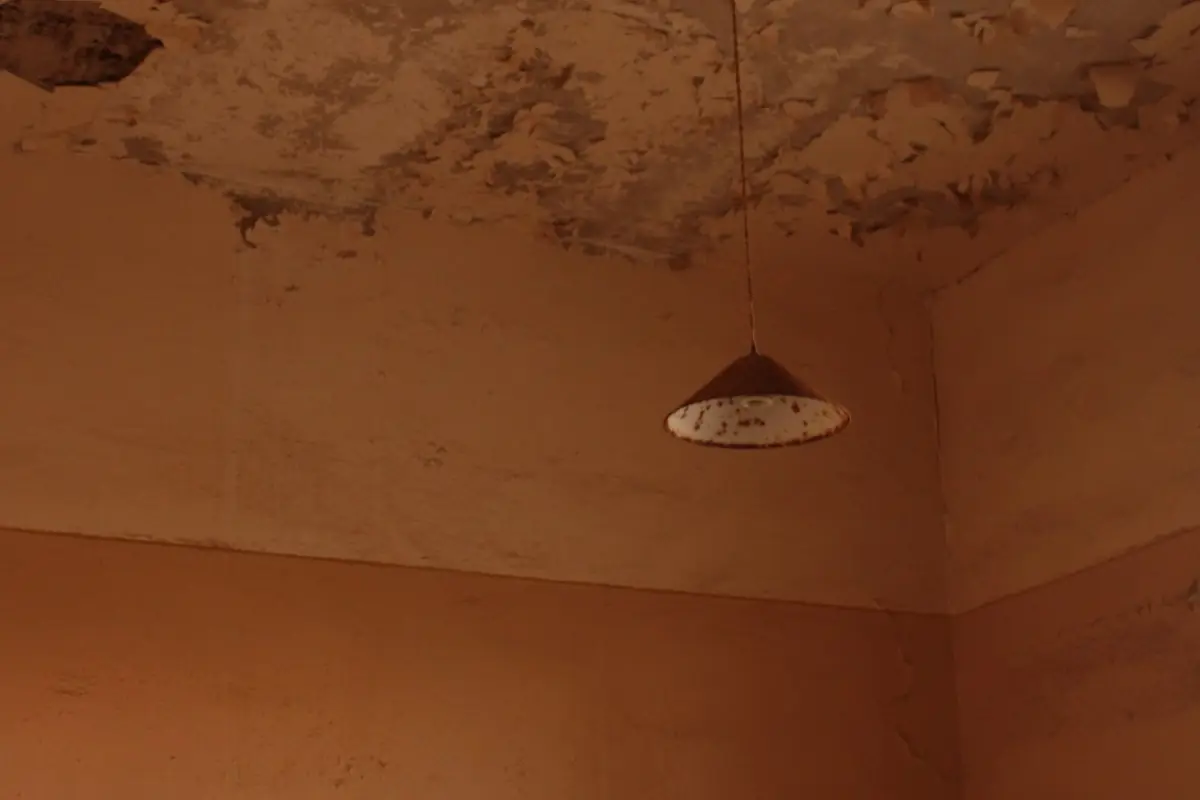
Smoke rises, collects against the ceiling, and stays there for the duration of the fire, so ceilings usually carry the heaviest deposit in any room — and they are the surface people inspect last. Textured and popcorn finishes make it harder again: the texture traps residue, and the coating can be fragile enough that scrubbing takes the texture off with the soot. Those generally want careful dry work and sealing rather than repeated washing.
If what you are looking at is defined marks or streaks rather than an overall film, that may be soot deposition or thermal tracking instead — see soot-stained ceilings and dark ghosting lines on walls and ceilings.
When the wall itself has to go
Replacement is the exception. Painted drywall in sound condition is normally cleanable and sealable. It genuinely needs removing when it has been wet through from firefighting water, when it is charred or heat-damaged rather than smoked, or where heavy odor has saturated the board and sealing has not held.
That first case matters more in this climate than most people expect: saturated drywall in Florida humidity can begin growing mould within roughly 24 to 48 hours, so wet board is a different and more urgent problem than smoked board. Where odor has gone into the cavity rather than the surface, smoke smell in walls covers what that takes.
 Clean, seal, then paint
Walls & ceilings FAQ
Dry first, wet second. Loose residue is lifted with a dry chemical sponge before any moisture touches the surface, because wetting dry soot drives it into the paint and turns a cleaning job into a refinishing one. Only then does the surface get washed with a cleaner matched to the residue and the paint type, working bottom to top so runs do not streak down uncleaned areas, and rinsed afterwards.
No, and it is the most expensive shortcut in this whole process. Ordinary paint is not an odor or stain barrier, so smoke residue bleeds through and the yellow-brown staining reappears within weeks, often unevenly. Worse, paint applied over a greasy or protein film has nothing sound to bond to and can fail or peel. Surfaces must be cleaned, then sealed with a stain-blocking primer, then painted.
Because smoke rises and then has nowhere to go. Hot smoke collects against the ceiling and sits there for the whole duration of the fire, so ceilings usually receive the heaviest and longest deposition in the room. They are also the surface people are least likely to inspect properly, most likely to be textured, and hardest to clean without dripping onto walls you have already done.
Usually not. Painted drywall in sound condition is generally cleanable and sealable, and replacement is the exception rather than the rule. Drywall does need replacing when it has been wet through from firefighting water, when it is charred or heat-damaged rather than just smoked, or occasionally when heavy odor has saturated the board and sealing has not held. An honest assessment tells you which of those applies before anything is torn out.
They are harder, because the texture holds residue in a way a flat surface does not and the coating itself is often fragile when wet. Aggressive scrubbing removes the texture along with the soot. These generally need gentle dry-sponge work first and, where staining persists, sealing rather than repeated washing. On older properties, textured ceilings can also predate modern materials standards, which is a reason to have them assessed rather than sanded or scraped.
Smoke film on your walls or ceilings?
We clean it, seal what needs sealing, and tell you honestly what needs repainting and what doesn't.