Office & Retail Smoke Cleanup in Boca Raton
In a workplace the damage is rarely the building. It is the equipment, the stock and the records — and the days you cannot trade while they are dealt with.
Smoke residue in a workplace is a problem for equipment and stock more than for structure. It is acidic and conductive, so it attacks circuit boards, contacts and finishes over days and weeks — which is why affected electronics should not be powered on, and why cleanup priority usually runs equipment and records first, surfaces second.
In a workplace, the building is rarely the problem
Structural damage from a workplace fire is often limited. The expensive damage is the things the business runs on: the equipment, the stock, the records — and the trading days lost while they are sorted out. So the priorities are close to the reverse of a residential job.
Electronics: why it gets worse after the fire
This is the part that costs businesses the most money and gets the least attention in the first 24 hours.
Smoke residue is acidic and mildly conductive. During the incident, anything with a cooling fan — servers, desktops, POS terminals, tills, printers — was actively drawing contaminated air across its own circuit boards. The residue settles on boards, connectors and contacts, and then keeps working: acidic residue corrodes metal over days and weeks, and in Florida humidity it does so faster, because moisture and acid together are more aggressive than either alone.
Which leads to the single most useful instruction on this page: do not power anything back on to check whether it survived. Energising contaminated contacts can short them, and the heat of operation bakes the residue onto components. Equipment that would have been recoverable is routinely destroyed in the first day by someone testing it. Leave it off, leave it unplugged, and have it assessed.
Priority order for a commercial space
| Priority | Why it comes first | What it needs |
|---|---|---|
| 1. Electronics and servers | Corrosion is active and time-dependent | Powered down, documented, assessed before any power-up |
| 2. Records and documents | Paper absorbs odor and is often irreplaceable | Photographed, isolated, specialist handling if valuable |
| 3. Stock and inventory | Claimable, but only if recorded before disposal | Photographed in place, then itemised with values |
| 4. HVAC system | It distributed the residue and will re-seed cleaned areas | Filter change, assessment of ducts and returns |
| 5. Surfaces and finishes | Important, but stable — they will still be there tomorrow | Standard clean, seal where needed |
| 6. Soft furnishings and partitions | Hold odor and release it back into the space | Cleaning or replacement per material |
Stock, records and the claim
Two things are worth knowing before anyone starts tidying. Packaging is not a barrier — smoke penetrates cardboard and porous packaging and the odor transfers to the product, so stock that looks perfectly saleable often is not. And anything disposed of before it is documented becomes very difficult to claim for.
So: photograph stock in place, then produce an itemised list with values, and only then dispose. The same logic applies to equipment written off. The wider documentation approach is on fire insurance claims, and the reason smoke-only losses attract more pushback is covered in is smoke damage covered by insurance.
Working around trading
Most commercial jobs are sequenced around the business rather than the damage: containment so that an unaffected part of the floorplate keeps working, out-of-hours and overnight work where that shortens the closure, and phasing so areas come back into use as they are finished.
That is a scheduling conversation as much as a technical one, and it is worth having on day one — because if you carry business interruption cover, the amount it pays is tied to how long restoration reasonably takes. How we run commercial work is on commercial fire & smoke cleanup; if the space is a restaurant, the reopening path is different again and is set out on restaurant & commercial kitchen fire cleanup.
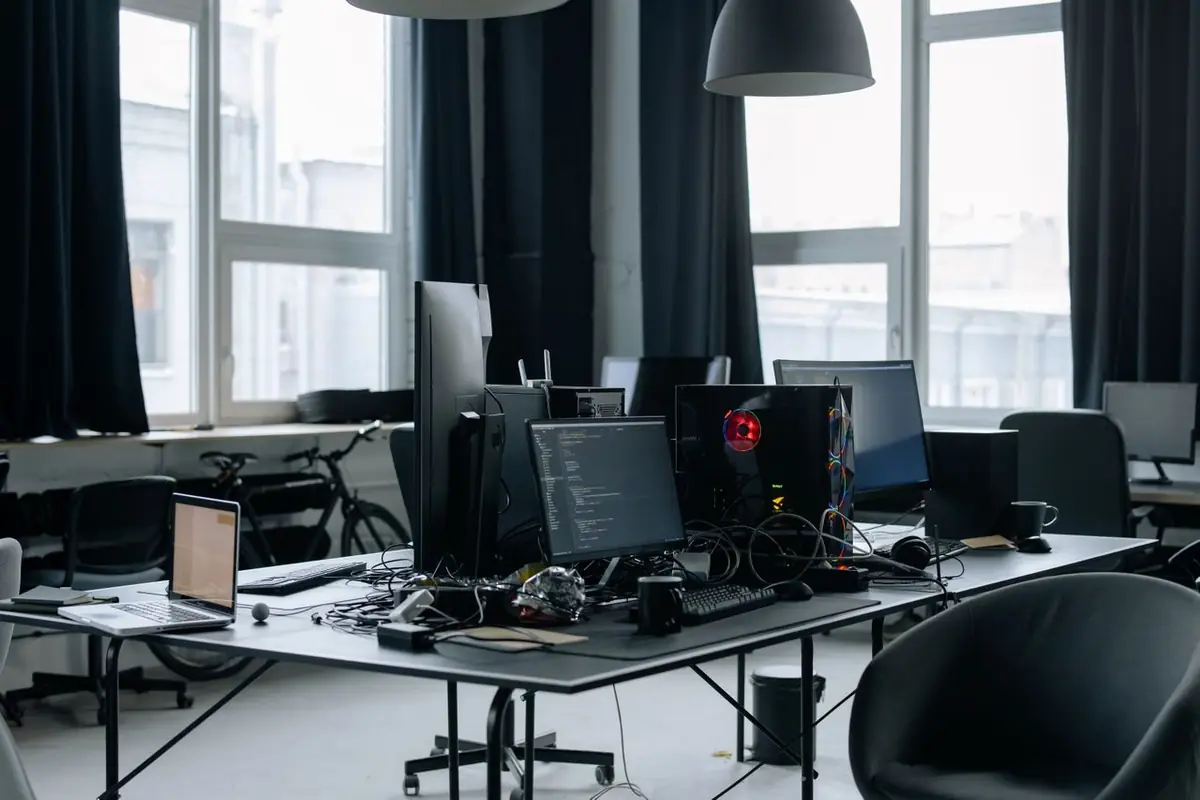 Equipment first, surfaces second
Office & retail smoke cleanup FAQ
Yes, and often after the event rather than during it. Smoke residue is acidic and mildly conductive, and it settles on circuit boards, connectors and contacts through cooling fans and vents. Left in place it corrodes those surfaces over days and weeks, and powering a device up can cause a short across contaminated contacts. The safe default is to leave affected equipment switched off and unplugged until it has been assessed rather than testing whether it still works.
No. That is the most common way smoke-affected electronics are destroyed after the fire rather than by it. Residue on contacts and boards can short when energised, and heat from operation bakes contamination onto components and drives it further in. Leave it powered down, do not plug it in to test, and have it assessed. This applies to servers, POS terminals, tills, printers and anything with a cooling fan that was drawing air during the incident.
Generally yes, but it depends on documentation. Photograph affected stock in place before anything is moved or disposed of, then produce an itemised list with values. Packaging is not a barrier — smoke penetrates cardboard and porous packaging, and odor transfers to the product inside — so goods that look untouched may still be unsaleable. Do not dispose of anything before it has been recorded.
The residue is acidic, so etching and corrosion start within hours on sensitive surfaces and continue for as long as it is left. Metals, glass, finishes and electronic contacts are all affected. Florida humidity accelerates it, because moisture and acidic residue together are more aggressive than either alone. That is the practical argument for starting within the first day rather than waiting for the loss adjuster's diary.
That is usually how commercial jobs are sequenced. The aim is to keep as much of the business operating as possible while the affected areas are dealt with, which often means overnight or out-of-hours work, phased areas, and containment so that a working part of the floorplate stays usable. The right sequence depends on what you need open and when, which is the first thing worth discussing.
Workplace closed by smoke damage?
We scope equipment, stock and surfaces separately, and sequence the work around when you need to be open.