Restaurant & Commercial Kitchen Fire Cleanup in Boca Raton
Cleaning the kitchen is the easy half. Getting the suppression system recharged, the surfaces sanitised and the health department satisfied is what actually decides when you reopen.
Reopening after a kitchen fire is a sequence, not a clean-up. Under NFPA 96 any suppression discharge — accidental or not — requires a full recharge and inspection before the kitchen can be used, the automatic fuel and power shut-offs need manual resetting, and a food-service facility generally needs health department approval before reopening.
Why reopening is a compliance question, not a cleaning one
Most restoration pages for this will tell you they clean restaurants. That is not what an owner standing in a closed kitchen actually needs to know. The question is what has to be true before you are allowed to trade again, and the answer is a chain of steps where the cleaning is only one link.
Three separate things gate a reopening after a suppression discharge or kitchen fire: the fire protection system has to be restored to service, the facility has to be clean and sanitary to a food-safety standard, and the utilities that shut themselves off have to be properly restored. Miss any one and the doors stay shut regardless of how good the kitchen looks.
What happens when the hood system fires
It is worth understanding what the system did, because it explains most of the mess and most of the delay. Under NFPA 96, when a commercial hood suppression system activates, several things happen at once and automatically:
- Wet chemical agent discharges onto the cooking surfaces and into the hood.
- All fuel and electrical power to the protected cooking equipment shuts off.
- Those shut-off devices then require manual resetting — they do not come back on by themselves.
That last point catches people out. Owners sometimes assume the line is dead because of fire damage when in fact the safety shut-off is simply doing its job and waiting to be reset by someone qualified, after the system has been recharged.
And the recharge is not optional. Any discharge — including an accidental one with no actual fire — requires a full recharge and inspection before the kitchen is used again. Servicing is also required semi-annually as a matter of course, by a trained, factory-authorised technician.
The reopening sequence
A printable version of this, with the paperwork list and who signs off on what, is in the restaurant fire reopening checklist.
| Step | What it involves | Who does it |
|---|---|---|
| 1. Make safe | Confirm the fire is out, the area is safe, and nothing is still energised that should not be | Fire service, then you |
| 2. Document | Photograph everything before cleaning — including spoiled stock and equipment | You, before anyone touches it |
| 3. Remove the agent | Wet chemical residue lifted from surfaces and equipment before it corrodes them | Restoration |
| 4. Recharge & certify the system | Full recharge and inspection; reset the fuel and power shut-offs | Fire protection technician |
| 5. Degrease hood, filters and duct run | The greasy residue that fed the fire in the first place | Restoration / hood cleaning |
| 6. Clean and sanitise | Food-contact surfaces, prep areas, and anywhere smoke reached | Restoration |
| 7. Discard and record stock | Anything smoke, soot, agent or temperature-exposed — itemised before disposal | You |
| 8. Inspection and sign-off | Health authority approval before the facility returns to service | Health department |
The residue: forgiving, but only if you are quick
Commercial hood systems use a wet chemical agent — typically potassium-based — that works by saponifying burning grease into a soapy layer that smothers the fire. It is genuinely good at that, and it is far kinder to clean up than the dry chemical in a portable extinguisher.
The catch is that the same alkalinity that turns grease into soap also attacks stainless steel, aluminium and equipment finishes if it is left sitting. It is water-soluble, so hot water and detergent handle it — but the clock matters, and every hour it sits on a prep counter or inside a hood is corrosion you are paying for later. If a portable extinguisher was also used, that residue behaves completely differently and is harder again; we cover that in kitchen fire extinguishers and their cleanup.
Downtime is the real cost
For a restaurant the cleanup invoice is rarely the biggest number. The lost trading days are.
If you carry business interruption cover, the amount it pays is tied to the period of restoration — broadly, the time it reasonably takes to get the premises back into operation. That has a direct consequence that most owners work out too late: how quickly and how competently the restoration is sequenced affects the claim, not just the invoice. Delay between the fire and the start of work is generally not recoverable, and it is entirely avoidable.
Two details worth checking in your own policy while the kitchen is shut. Most business interruption cover has a waiting period, commonly in the region of 24 to 72 hours, before it starts paying. And standard extended business income cover — the part that covers the ramp-up after you reopen, while customers drift back — is often only around 30 days, which is optimistic for food service. Knowing both numbers before you plan the reopening is worth an hour of anyone's time.
How we sequence commercial work around trading is set out on commercial fire & smoke cleanup, and the documentation side is in fire insurance claims.
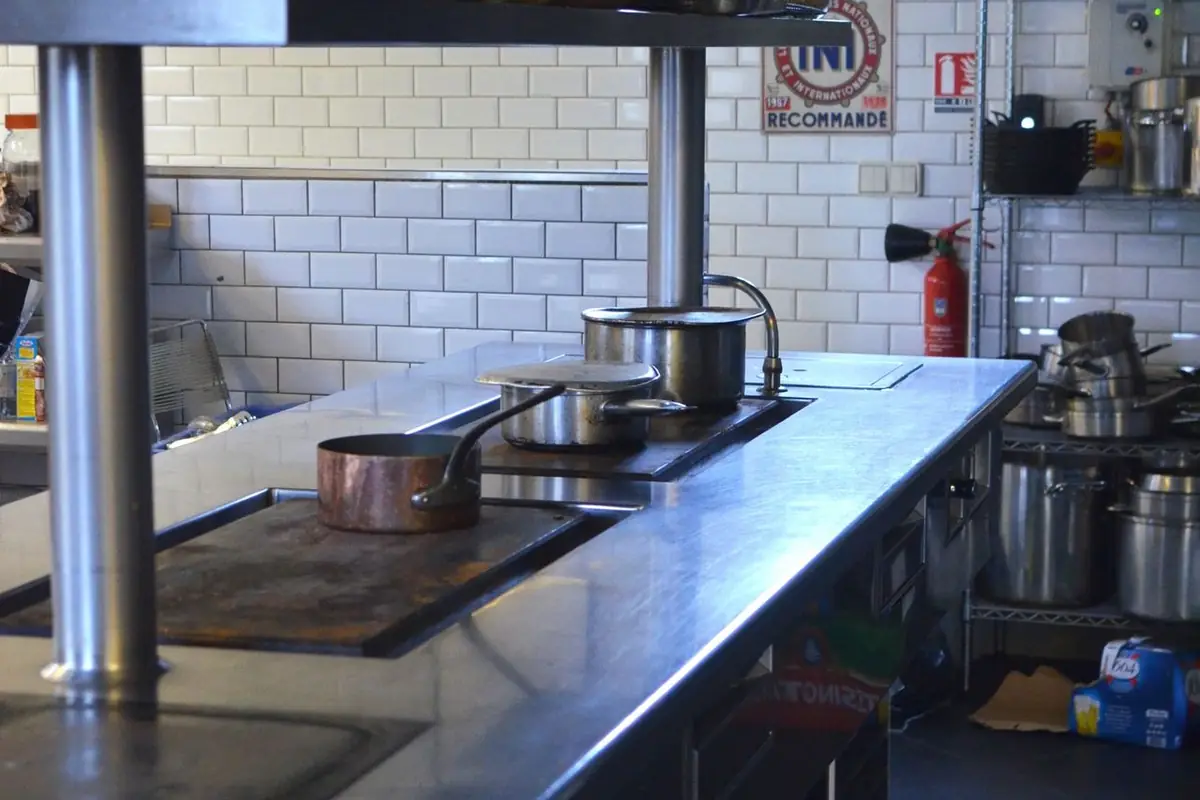 Reopening is a compliance path
Restaurant fire cleanup FAQ
Not until the system has been serviced. Under NFPA 96 any discharge, accidental or otherwise, requires a full recharge and inspection by a qualified technician before the kitchen is used again. The activation also automatically shuts off fuel and electrical power to the protected cooking equipment, and those shut-off devices require manual resetting — they do not reset themselves when the system is recharged.
For a licensed food-service facility, generally yes. Smoke, soot, water and suppression chemicals all raise food-safety concerns, so the health authority typically wants the affected areas cleaned and sanitised and the facility inspected before it goes back into service. Contact your local health department early rather than at the end — knowing exactly what they want signed off shapes the order the cleanup runs in.
It is corrosive if it is left. Commercial hood systems use a wet chemical agent, typically potassium-based, that saponifies burning grease to smother the fire. That same alkalinity attacks stainless steel, aluminium and equipment finishes over time, so the residue needs removing promptly rather than at the end of the week. It is water-soluble, which makes it far more forgiving than dry chemical, but only if it is dealt with quickly.
Anything exposed to smoke, soot, suppression agent or extended loss of refrigeration should be discarded, including sealed and packaged goods, because smoke penetrates packaging and food safety authorities treat exposure conservatively. Document what you throw away with photographs and an itemised list before disposal — spoiled stock is normally claimable, and it is one of the easier parts of a commercial claim to substantiate if you record it properly.
It varies enormously with the extent, but the constraint is rarely the cleaning itself — it is the sequence. Suppression recharge, degreasing the hood and duct run, cleaning and sanitising food-contact surfaces, restoring utilities that were automatically shut off, and obtaining the necessary sign-offs all have to happen in order. A contained flare-up handled the same day can be days; anything involving the duct run, the ceiling or the dining room is realistically longer.
Kitchen closed after a fire?
Every day shut is revenue gone. We scope same-day and sequence the work around getting you cleared to reopen.