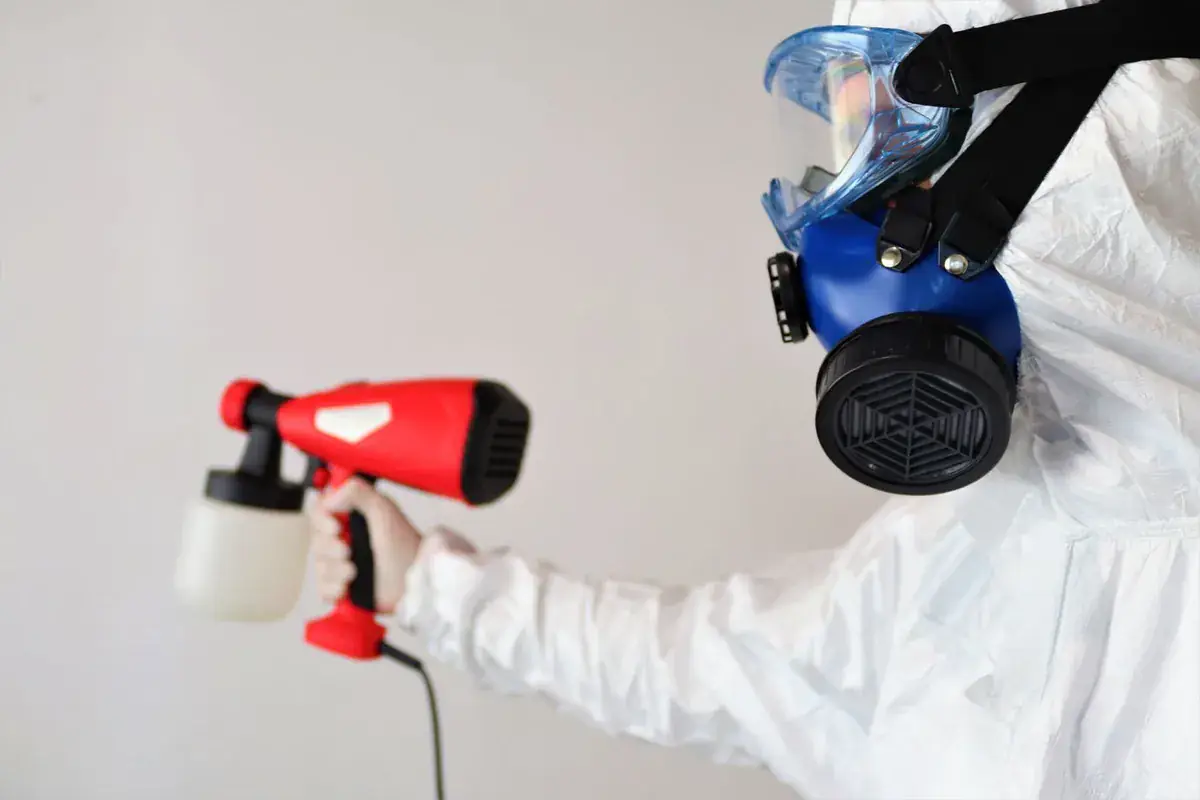
An ozone smell in the house is usually a sharp, pungent odor from a device that makes ozone: an ozone generator, some electronic air purifiers, or a recent deodorizing treatment. Turn the device off, open windows, and leave the room. The EPA says the smell can mean the level is too high.
Ozone has a smell most people notice before they can name it. The National Institute for Occupational Safety and Health describes it as a colorless to blue gas with a very pungent odor. If it shows up after you plug in a new air purifier, rent a machine to fight a smoke smell, or come home from a treatment, the source is usually in the house with you, and it can be switched off.
The short version
- Ozone smells sharp and pungent, and noticing it is a warning, not proof the air is clean.
- Most household ozone comes from a device: an ozone generator, some electronic air cleaners, or a recent treatment.
- Turn it off and ventilate; the EPA warns that relatively low amounts can cause chest pain, coughing, and throat irritation.
- A burning or rubbery smell is different: that is an electrician call, not an ozone problem.
- For smoke odor, professional ozone treatment runs only in an empty, sealed space after the residue is cleaned off.
What does ozone smell like?
NIOSH lists ozone’s odor as “very pungent.” You notice it in the nose and throat more than as a scent: sharp, clean-seeming, and irritating if you stay in it. That clean impression is part of the problem. It can make a room feel fresh while the air is less safe to breathe.
The EPA puts it plainly: the smell of ozone may indicate that the concentration is too high, and a lack of odor does not guarantee that levels are safe. So your nose can raise the alarm, but it cannot give the all-clear.
Where an ozone smell in a house comes from
| Source | How to tell | What to do |
|---|---|---|
| Ozone generator (“ozone air purifier”) | Smell is strongest near the unit and fades when it is off | Turn it off, ventilate, keep people and pets out of that room |
| Electronic air cleaner: ionizer, electrostatic precipitator, PCO, hydroxyl, UV | Started after a new purifier arrived | Check whether it is certified for low ozone output (see below) |
| A recent ozone deodorizing treatment | Smell lingers after a smoke or odor job | Stay out and keep ventilating until the smell is fully gone |
| Something electrical overheating | A burning, rubbery, or hot-plastic smell, warm outlets, flickering lights | Not ozone advice: the NFPA says call a qualified electrician |
California tests air cleaners for ozone. Since its rule took effect, every indoor air cleaner sold there must emit no more than 0.05 parts per million of ozone (California Air Resources Board), and CARB notes that its “electronic” category, which includes ionizers, electrostatic precipitators, PCOs, hydroxyl generators, and devices with UV light, can generate ozone (CARB certified list). If a unit is listed there, it has been tested; if it is sold as an “ozone generator,” making ozone is the point.
Covering a smoke smell with an ozone machine adds a second pollutant. Researchers at Lawrence Berkeley National Laboratory found that ozone generators are generally not effective against most indoor volatile organic compounds, can push indoor ozone well above health-based standards, and can drive reactions that raise formaldehyde and ultrafine particles. The smoke residue stays where it was. Call (728) 224-6880 before you run one again
Is an ozone smell dangerous?
It can be. The EPA says relatively low amounts of ozone can cause chest pain, coughing, shortness of breath, and throat irritation, and can worsen asthma. The California Air Resources Board strongly advises against using ozone generators in spaces occupied by people or animals, and notes that they can produce indoor levels several times higher than the state’s outdoor health standards of 90 parts per billion over one hour and 70 over eight hours.
Workplace limits give a sense of scale: NIOSH’s recommended ceiling and OSHA’s permissible limit are both 0.1 parts per million. A home has no one measuring, which is why the safe response to the smell is to remove its source and air the space out.
How to get rid of an ozone smell
- Switch off the source. Unplug the ozone generator or electronic air cleaner.
- Get people and pets out of the room, including birds and anyone with asthma.
- Ventilate. Open windows and doors, and run exhaust fans that vent outdoors.
- Wait until the smell is completely gone, and remember the EPA’s point that no smell does not prove the level is safe; keep airing the space out a while longer.
- Deal with the original odor properly. If the machine was running to fight smoke, the residue is still in the walls, soft goods, and ducts, and that is what has to be cleaned.
For anyone with asthma, the smell is the signal to leave the room. The EPA notes that ozone can worsen asthma. Air the space out with them elsewhere, and if the smell came from a smoke-odor fix, let us remove the source so no machine is needed. Ask for a written estimate
How long to stay out after an ozone treatment is its own question, covered in how long after an ozone machine is it safe to go back in.
Frequently asked questions
Some electronic air cleaners make ozone as a byproduct. The California Air Resources Board lists ionizers, electrostatic precipitators, PCOs, hydroxyl generators, and UV devices as able to generate ozone, and only certifies units that emit 0.05 ppm or less. If the smell started with a new purifier, switch it off and ventilate.
Turn off whatever is making it, move people and pets out, and open windows and doors to ventilate. Keep airing the space until the smell is completely gone, and a while longer, because the EPA notes that a lack of odor does not guarantee the level is safe.
A burning, rubbery, or hot-plastic smell is a different problem from ozone and should be treated as electrical. The NFPA advises calling a qualified electrician for a burning or rubbery smell from an appliance, warm or discolored outlets, or flickering lights. Do not try to deodorize it.
No. The EPA says relatively low amounts of ozone can cause chest pain, coughing, shortness of breath, and throat irritation, and can worsen asthma. Turn the source off, ventilate the room, and sleep elsewhere until the smell is gone and the room has been aired out.
No. Mechanical filters such as HEPA do not make ozone. The California Air Resources Board groups ionizers, electrostatic precipitators, PCOs, hydroxyl generators, and UV devices as electronic cleaners that can generate ozone, and ozone generators make it on purpose. Check the product listing or CARB certification before you buy.
The bottom line: an ozone smell is a sign to switch something off and open the windows, not a sign the air is clean. If a machine was covering a smoke smell, the smell will be back once it stops, because the residue is still there, and that is the part we remove.